Family Heirloom Recipes in Estate Planning
Ask around, and you’ll probably learn that almost every family has that one recipe that’s practically sacred.
Maybe it’s the apple pie with a crust flakier than your son’s ex-girlfriend. Or maybe it’s that Rosh Hashanah kugel recipe, guarded more closely than Fort Knox.
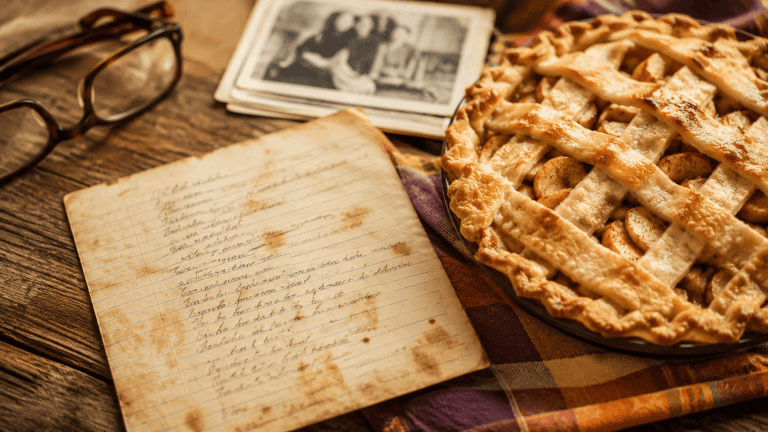
These family heirloom recipes aren’t just food — they’re edible family history, copied and re-copied from an original index card that’s more food stain than paper by now.
Now here’s the problem: when Grandma passes away and it’s time to settle her estate, that pie recipe can stir up more drama than her jewelry — or even her house. The elder law attorneys at Kabb Law have seen it firsthand. Money causes fights, but nothing starts a family feud quite like figuring out who inherits the secret to the legendary apple pie.
Why Family Recipes Feel Sacred — and Why Estate Fights Happen Over Them
A recipe card doesn’t look like much. But it represents identity, belonging, and a hundred Sunday dinners’ worth of memories. That’s exactly why families fight over it — it was never really about the pie. It’s about who gets to carry the tradition forward. When there’s no clear plan for passing down family heirloom recipes, that ambiguity is where the resentment starts.
What the Law Actually Says About Passing Down Family Heirloom Recipes
Let’s look at the law. What does it actually say about passing down a recipe? Here’s the breakdown: legally, the pie itself is out of the question — unless you’re planning to haunt your heirs with a moldy surprise. But the recipe card itself, permanently stained and permanently loved, is another story entirely. You can absolutely name a recipient for the recipe, the same way you would for an oil painting or a ruby ring, by including it directly in your will or trust.
Can You Copyright or Trademark a Family Recipe?
This is where people get tripped up. Under U.S. Copyright Office guidance, a basic list of ingredients and steps isn’t protected — recipes, on their own, don’t qualify as copyrightable works. The exception is if Grandma wrote the recipe into a larger, more personal piece of writing, like an epic family memoir; that surrounding narrative can be protected even though the ingredient list still isn’t.
But if the recipe is more like a trade secret — shared only with a very selective group and never posted on Facebook — it’s entirely possible to keep it confidential for generations, right up until someone spills the beans at a Rosh Hashanah dinner.
The Real Issue Isn’t Legal — It’s Emotional
Here’s what’s really happening: the law is only one piece of this puzzle. The bigger piece is emotional. These guarded recipes represent family identity and belonging, and that’s precisely why they deserve the same deliberate planning as anything else in your estate.
How to Protect Grandma’s Recipe (and Every Other Heirloom) in Your Estate Plan
If you want to avoid the case of the mysteriously missing index card, talk to me — Rachel Kabb Effron at Kabb Law. I specialize in helping families include every sentimental item in their estate plan, whether it’s a 200-year-old grandfather clock, a pie recipe, or your great-grandmother’s cut crystal pitcher. List your wishes clearly — who gets what, and maybe even who gets to be the first to bake it.
A little planning saves a lot of heartache. I’ll help you fold your treasures, including Grandma’s pie recipe, into your will or trust, so every legacy — culinary and otherwise — stays exactly where it belongs: in the family.
If preserving stories, flavors, and traditions matters to you, don’t leave it up to chance. Put it in writing, and make sure your family’s best recipes become part of the legacy you leave behind.
And one final word from Kabb Law, for Grandma’s sake: don’t use margarine. Some things really aren’t meant to change.
FAQ: Passing Down Family Recipes and Heirlooms
Can I leave my family recipe to someone in my will?
Yes. While you can’t “inherit” the physical pie itself, you can name a specific person to receive the recipe card or written recipe, just as you would name a beneficiary for a piece of jewelry or a family heirloom.
Is a family recipe protected by copyright?
Generally, no. A basic list of ingredients and instructions isn’t eligible for copyright protection. An exception exists if the recipe is embedded in a larger creative work, such as a personal memoir or story.
Can a family recipe be kept a trade secret?
Yes, if it’s shared only within a limited, trusted circle and not made public. Many families successfully keep a recipe confidential for generations using this approach, paired with clear instructions in an estate plan.
Why do families fight over sentimental items like recipes?
Sentimental items carry emotional weight tied to identity and belonging, which often makes them more contentious than higher-value assets. Clear, written estate planning instructions are the most effective way to prevent disputes.
Family Heirloom Recipes – Key Takeaways
- The physical pie can’t be inherited—but the recipe itself can be, if you name a recipient in your will or trust.
- Recipes generally aren’t copyrightable, but they can be protected as a trade secret if kept within a limited circle.
- Sentimental items like recipes cause outsized family conflict because they represent identity, not just value.
- Clear, written instructions in your estate plan—for recipes and every other heirloom—prevent disputes before they start.
Talk to an Elder Law Attorney About Your Family’s Legacy
If you have questions about protecting your family’s heirlooms, recipes, or legacy, my team at Kabb Law is ready to help. We’re also ready and willing to do taste tests. Call Rachel Kabb Effron at 216-991-5222.
