
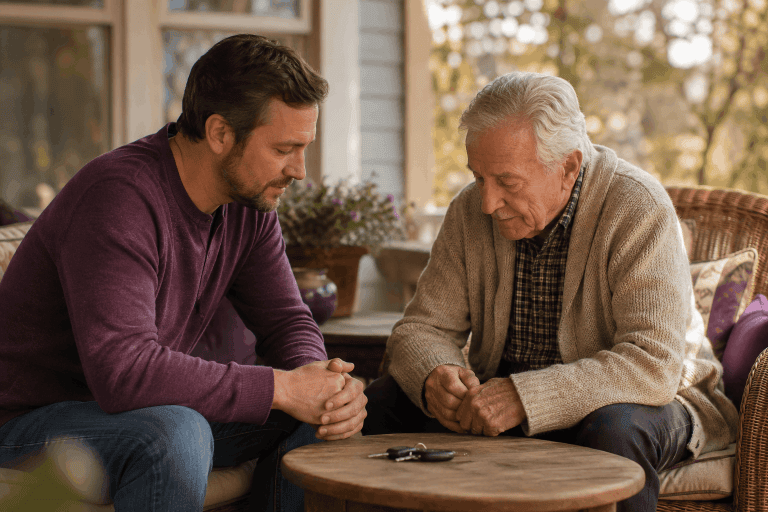
When Should Elderly Parents Stop Driving?
This could be one of the toughest topics you ever have to raise with your parents.
How do you even begin? Do you just say, “Dad, I think it’s time to stop driving”?
This conversation is as difficult as talking about money or moving out of the family home. It’s awkward, it’s emotional, and more often than not, it gets avoided until it’s too late.
Why Families Struggle With When Elderly Parents Should Stop Driving
The reality is that aging changes our vision, our reflexes, and our overall health. Driving can become dangerous — not because your parents are careless, but because their bodies and reactions have changed. The National Institute on Aging notes that slower reflexes, reduced night vision, and certain medications can all affect a person’s ability to drive safely as they get older.
We know it’s a tough subject to broach. But ignoring it puts everyone’s safety at risk — your parents included. The question families bring to Kabb Law is almost always the same: “How do we protect the people we love and still respect their independence?”
Start With Empathy, Not an Ultimatum
At Kabb Law, we always start with empathy. To most seniors, their car is more than metal and wheels. It is freedom. It is privacy. It is dignity. When the day comes to take away your parents’ car keys, the loss can feel like losing a lifeline.
We’ve sat with enough families to know how complicated these conversations become. That’s why we help families prepare before the decision turns into an urgent, no-time-to-plan situation. Just having a calm, neutral third party at the table — someone who isn’t a spouse or a sibling — often makes it easier for everyone to speak honestly, without the conversation turning emotional or defensive. We guide your family through it, helping you weigh safety, independence, and family dynamics so no one feels railroaded or left out of the process.
Warning Signs It May Be Time to Have the Conversation
Maybe your concern is already backed up by something concrete — fender benders, close calls, new dents you can’t explain, or a doctor raising red flags at a recent appointment. These signals tell you it’s time to plan, not wait.
The AAA Foundation for Traffic Safety points to warning signs such as getting lost on familiar routes, trouble reading street signs, or friends and family expressing concern about your driving — all worth taking seriously.
Putting the Right Legal Documents in Place
When these warning signs show up, Kabb Law helps families get the correct documents in place before there’s a crisis. That could mean drafting a power of attorney, naming a trusted adult child to manage transportation and finances if a parent can no longer do so safely. In more serious situations, it could mean pursuing guardianship, when safety is genuinely at stake, and other options have run their course.
Every plan is tailored to the family in front of us. There’s no cookie-cutter version of this. We’ve seen the common pitfalls — the red flags families miss because they’re too close to the situation — and we know how to plan around them before they become a crisis. If you haven’t put a power of attorney or guardianship plan in place yet, this is exactly the kind of moment to start.
Resources Beyond the Legal Documents
Legal planning is only part of the picture. Kabb Law can also help connect families to local resources: driving assessments through occupational therapists, senior transportation services around Northeast Ohio, and support groups for both aging parents and the adult children caring for them. Programs like AARP’s Smart Driver course also offer refresher training and self-assessment tools that can help start the conversation on a positive note rather than a confrontational one.
Giving up the car keys doesn’t have to mean giving up independence. With the right planning, your parents can keep their dignity, and your family can keep its relationships intact, even through a rough transition.
This Is About Trust, Not Just Paperwork
This isn’t just about paperwork. It’s about maintaining trust and making sure your parents feel supported at every step, not managed. When you and your parents reach this crossroads, remember you’re not navigating it alone.
Reach out to Rachel Kabb-Effron at Kabb Law (216) 991-5222 the moment you start to worry. She will help you assess the situation, open the conversation the right way, and put a plan in place that keeps your loved ones safe and respected — now and in the years ahead. You can also visit our elder law planning page or contact us to schedule a consultation.
Key Takeaways
- Aging affects vision, reflexes, and reaction time—that’s why driving conversations become necessary, not a judgment on your parents’ character.
- Start with empathy, not an ultimatum. The car represents freedom and dignity, not just transportation.
- Fender benders, close calls, and medical warnings are signals to plan now, not wait for a crisis.
- A power of attorney or guardianship can put a trusted family member in charge of transportation and finances when needed.
- Kabb Law connects families to driving assessments, transportation services, and support groups—not just legal paperwork.
Frequently Asked Questions About Elderly Parents and Driving
When should elderly parents stop driving?
There’s no single age that applies to everyone. Most experts point to specific warning signs — new dents or scrapes, getting lost on familiar routes, slower reaction time, or a doctor flagging a medical condition — rather than a birthday. Watching for these signs is more useful than picking a number.
How do I talk to my parents about giving up driving?
Start with empathy, not an ultimatum. Bring up specific, observed concerns rather than generalities, and involve a neutral third party — like an elder law attorney — if the conversation tends to get emotional or defensive.
What legal documents help with this transition?
A power of attorney lets a trusted family member manage transportation and finances if a parent can no longer do so safely. In more serious situations, guardianship may be necessary to protect a parent who can’t safely make these decisions alone.
Can an elder law attorney help before there’s a crisis?
Yes. Kabb Law works with families proactively, before an accident or medical event forces the issue, to put the right documents and support systems in place ahead of time.
What if my parent refuses to stop driving?
This is common, and it’s exactly why having a plan — and a neutral party like an elder law attorney — helps. We work with families to navigate refusal calmly, weighing safety against independence without turning it into a family conflict.
